Featured Projects

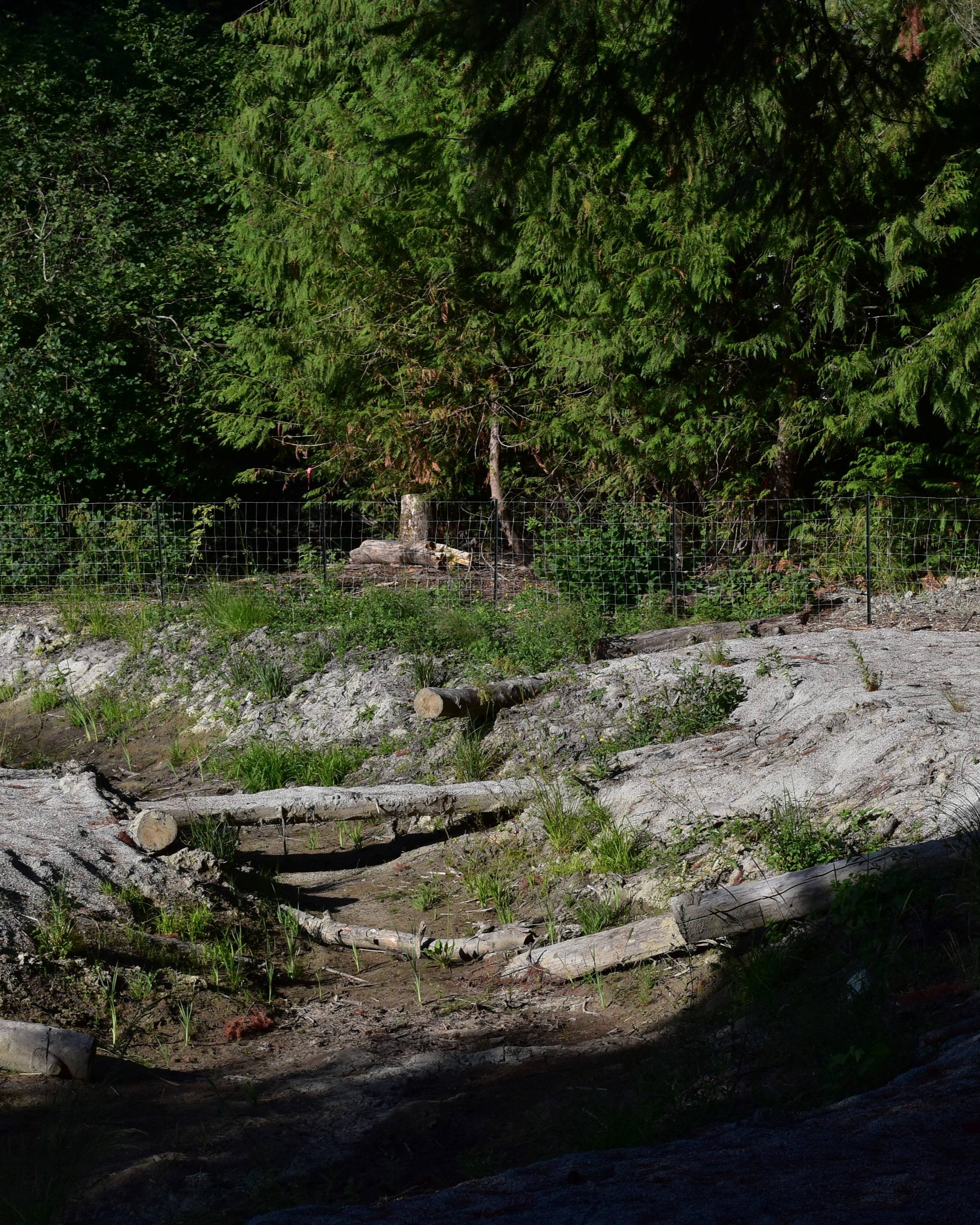
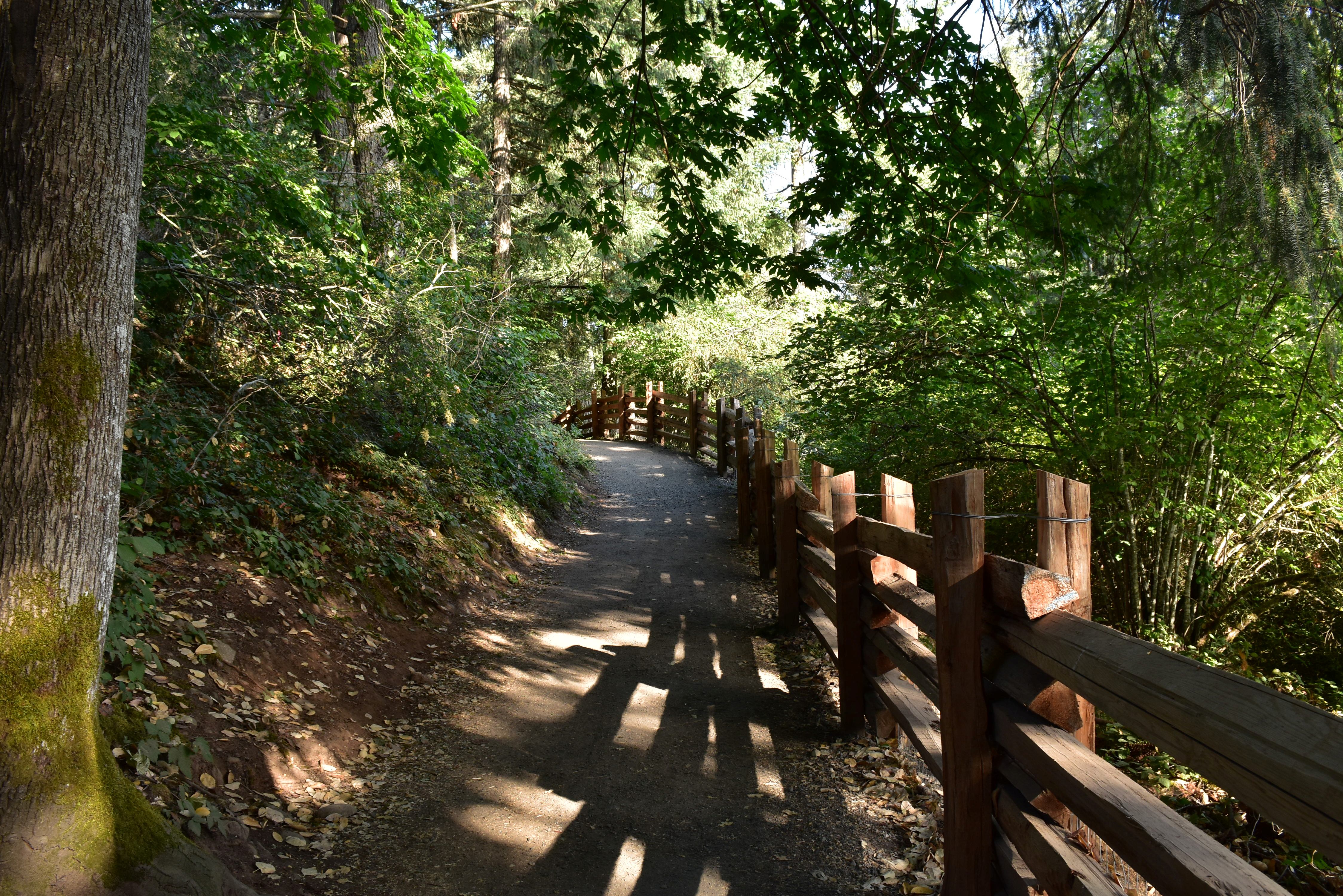
Explore our portfolio of habitat restoration, invasive species management, trail building and specialty habitat restoration projects. Our work spans diverse landscapes, from parks and natural areas to roadways and utility corridors. Discover how we tailor solutions to meet the unique challenges of each environment, ensuring sustainable and effective outcomes.

Royal Bay Complete Habitat Enhancement & Trail System – Colwood, BC
PATH Developments (formerly GableCraft Homes)
Scope of Work
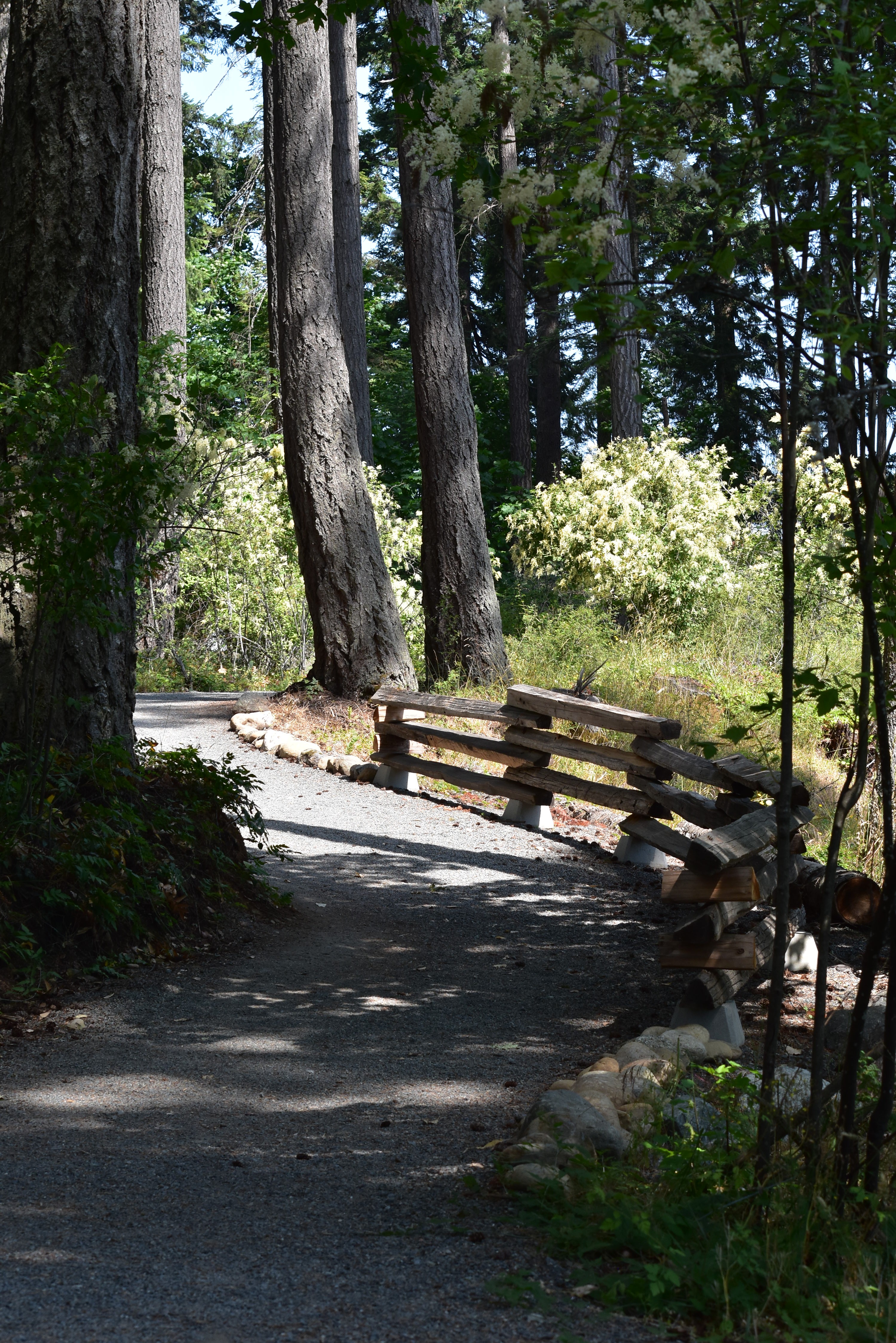
Invasive species removal across ~160 acres initially before Beachlands sale. Native habitat restoration and slope stabilization. Trail system design and construction (multi-phased). Soil amendment, topsoil distribution, planting, and erosion control along the entire wildland-timber interface. Boulder and gravel installation using on property materials.
Challenges
Entire site was overrun with noxious weeds including Scotch broom, Poison Hemlock, Giant Hogweed, Milk Thistle, Canada thistle, and diffuse knapweed.

Initial site conditions were raw quarry slopes with no topsoil, little water retention, and poor plant survivability.

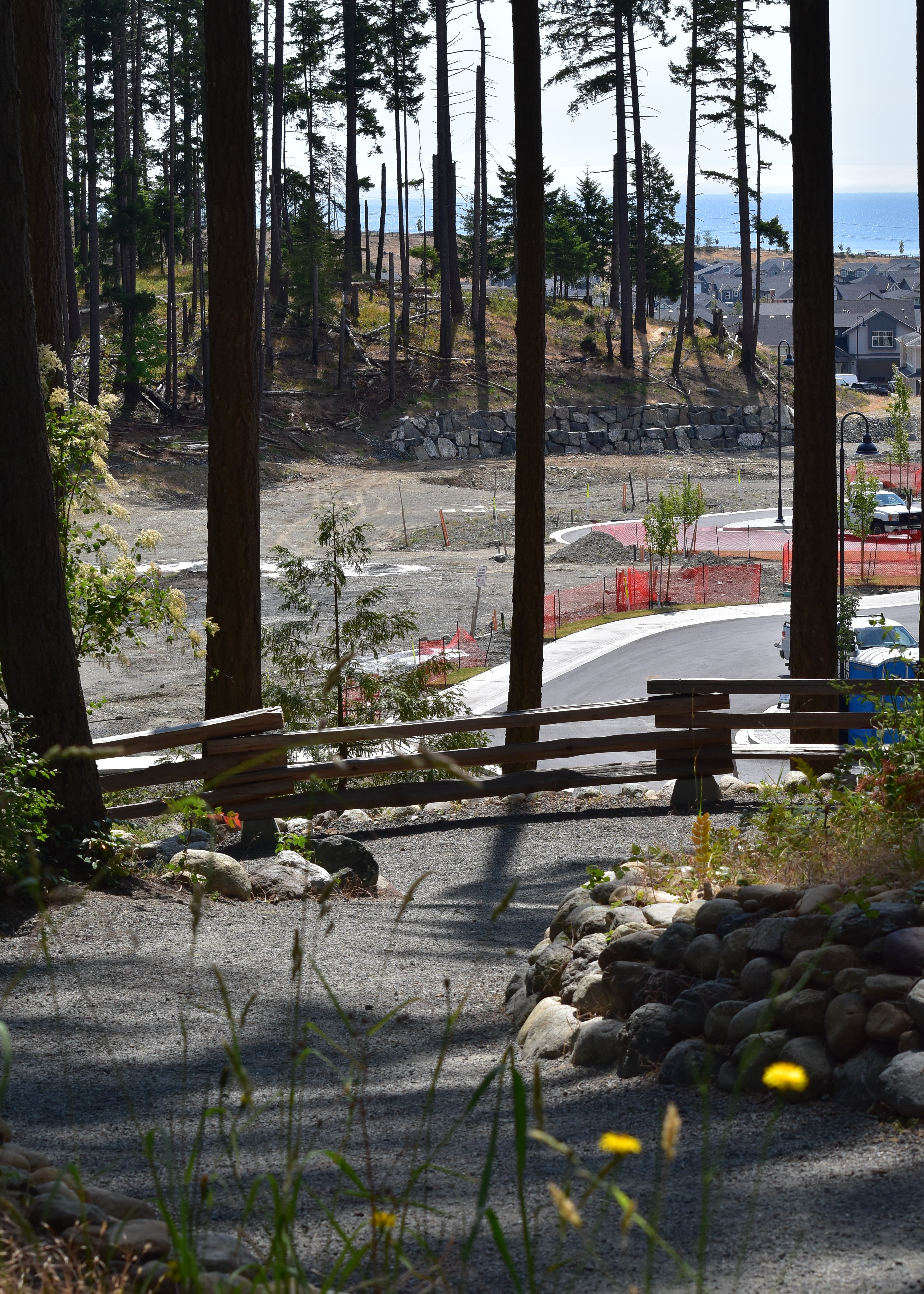
Trail corridors had to be established before residential infrastructure, across sloped and forested terrain.

Some builds occurred after housing construction, requiring delicate maneuvering in tight zones.

Scattered large dead Grand Firs throughout the site, including several dense clusters, required precision falling within live timber, demanding the expertise of a seasoned faller to navigate variable spacing and avoid collateral damage.
Approach
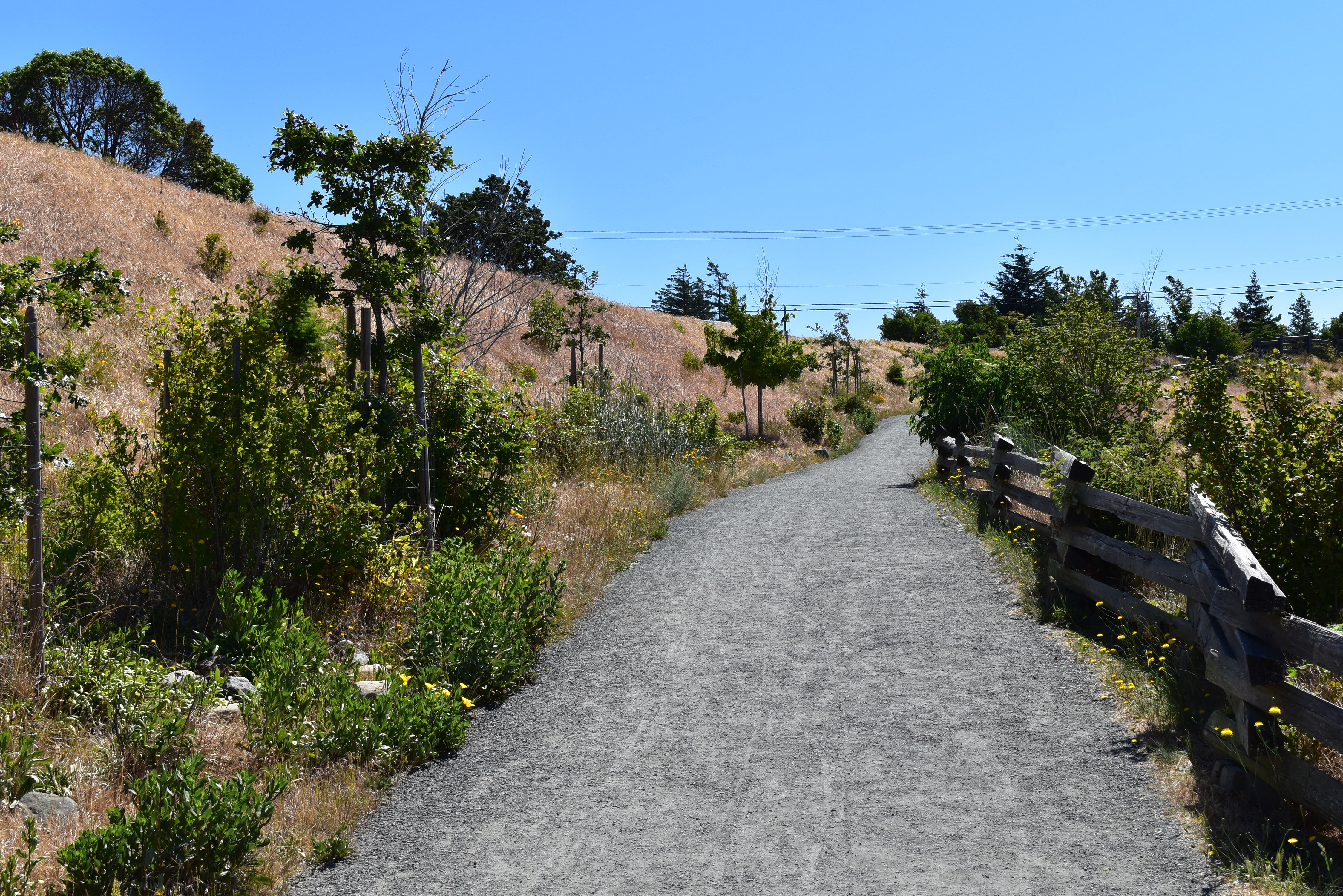
SHR was brought on early to assess restoration opportunities and manage invasive species before development began. As the project expanded, our team designed and built a permanent perimeter trail system, working carefully within forested edges, selectively falling dead stands and aligning trails to avoid remnant old-growth Douglas-fir. On-site materials from nearby developments were repurposed to rebuild degraded slopes and construct durable trails, transforming former quarry ground into stable, plantable corridors and inviting natural pathways. The work followed a strategic, phased plan that blended ecological restoration with long-term trail infrastructure.
Outcome
A trail network completed over a 10-year period, with final construction in 2022. The system has remained durable under heavy public use, with formerly degraded slopes now functioning as stable, densely planted native corridors. Boulder-armored sections, split-rail fencing, and grade-adapted pathways continue to hold their structure and aesthetic with minimal maintenance. This project stands as one of SHR’s longest-running and most visible restoration achievements.

Bear Mountain Complete Habitat Restoration – Langford, BC
Keycorp Developments

Scope of Work
Multi-year habitat restoration across steep, southwest-facing slopes. Full-spectrum invasive species management and native planting. Irrigation system design and installation in coordination with site partners. Slope stabilization with fencing, soil amendment, and custom seed mix. Long-term invasive species suppression and plant establishment strategy


Challenges
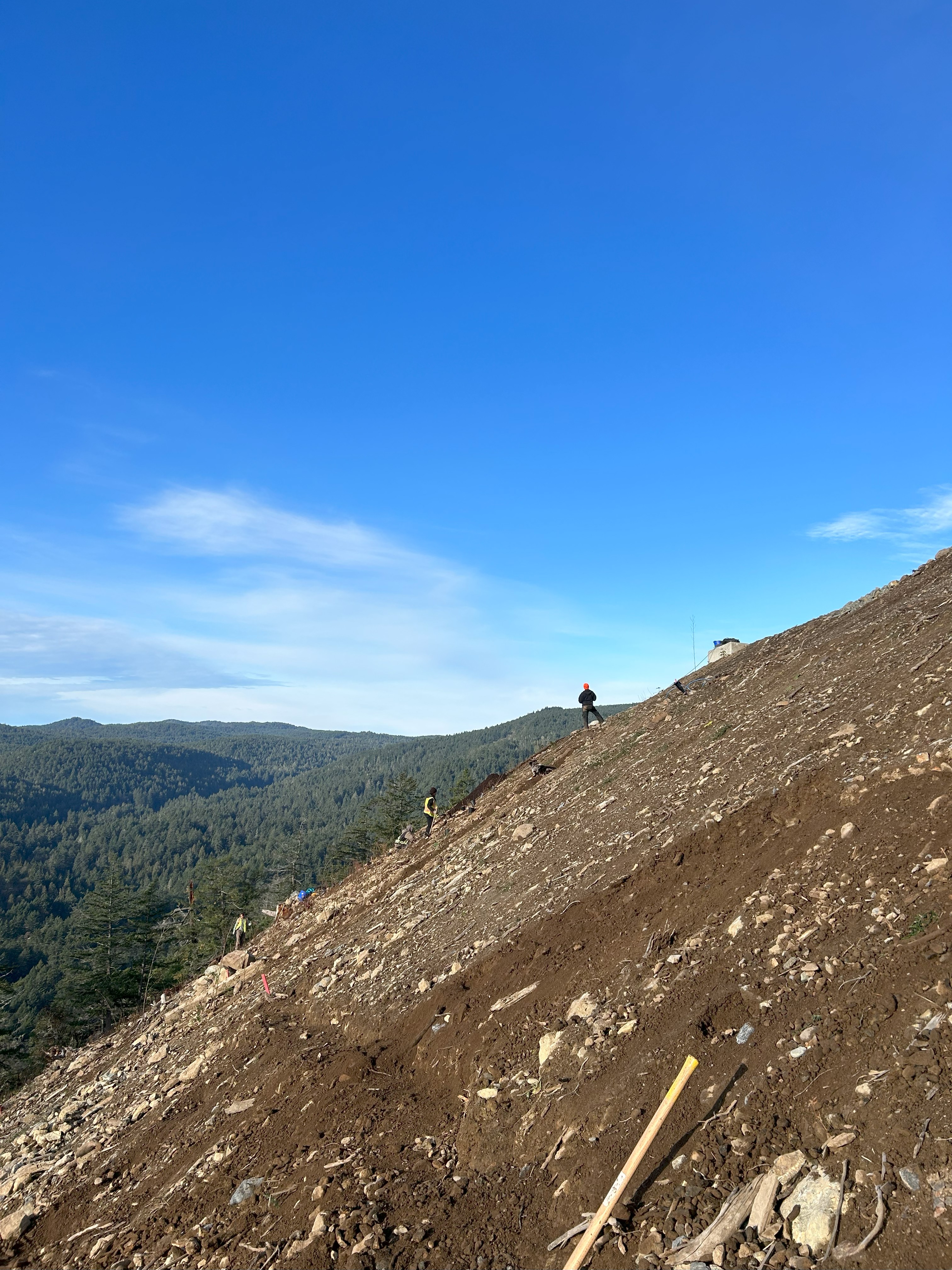
2:1 gradients spanning up to 200 vertical feet.

Nutrient-poor topsoil placed during development.

Full sun exposure, high winds, and prolonged drought conditions.

Limited slope access and pressure from deer and wildlife browsing.
Approach
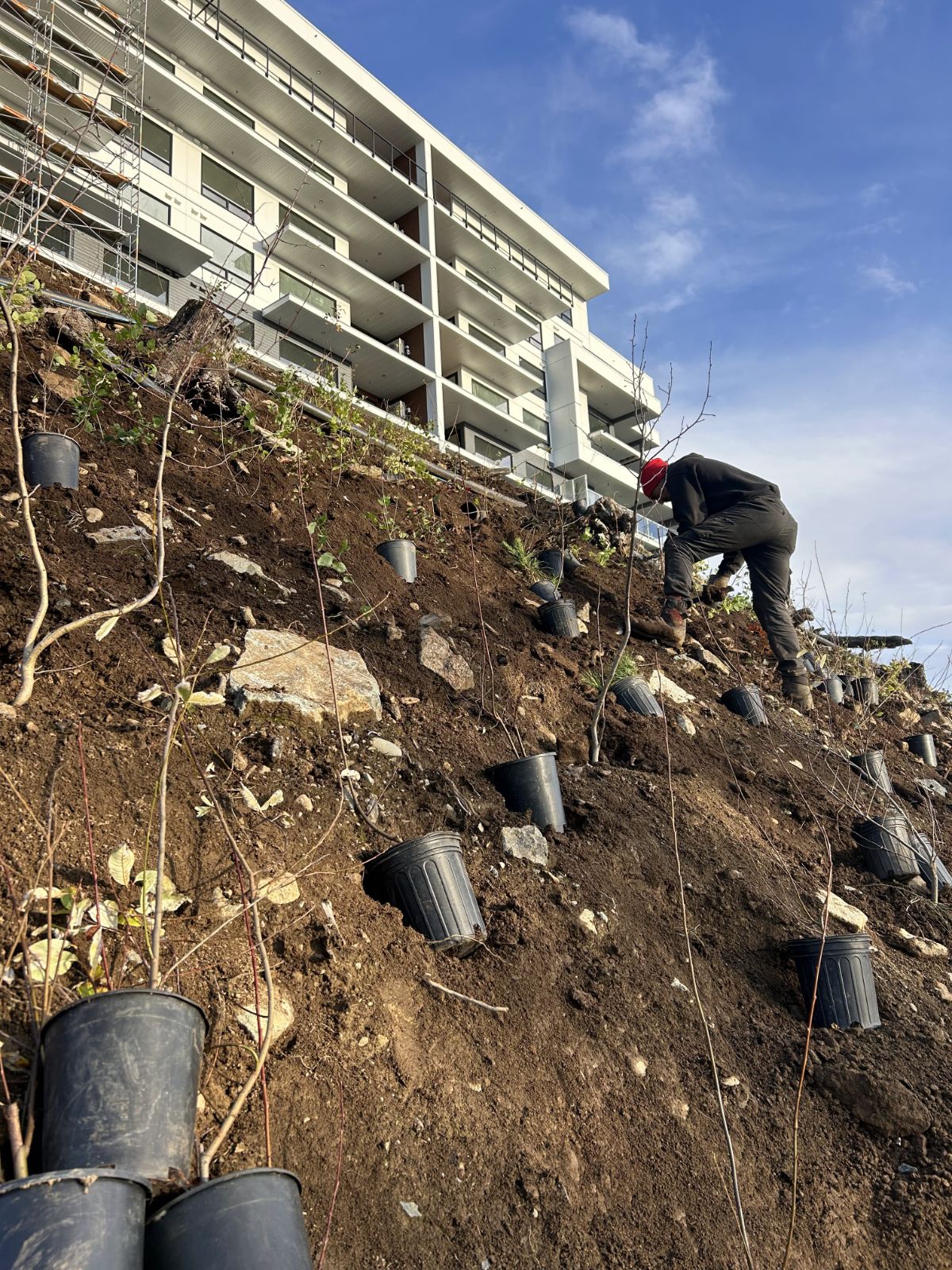
Faced with a steep, exposed slope with almost no safe access, SHR and Corvidae created a phased restoration plan built around stabilization, irrigation, and native plant recovery. A custom winch system allowed materials and tools to be lowered into place, enabling work in areas that couldn’t be reached by conventional methods. SHR then coordinated with the client and contractor to implement a reliable irrigation system across all planting zones. After planting, a Garry Oak seed mix was applied for rapid soil coverage and invasive suppression, and fencing was installed immediately to protect the emerging vegetation from wildlife.
Outcome
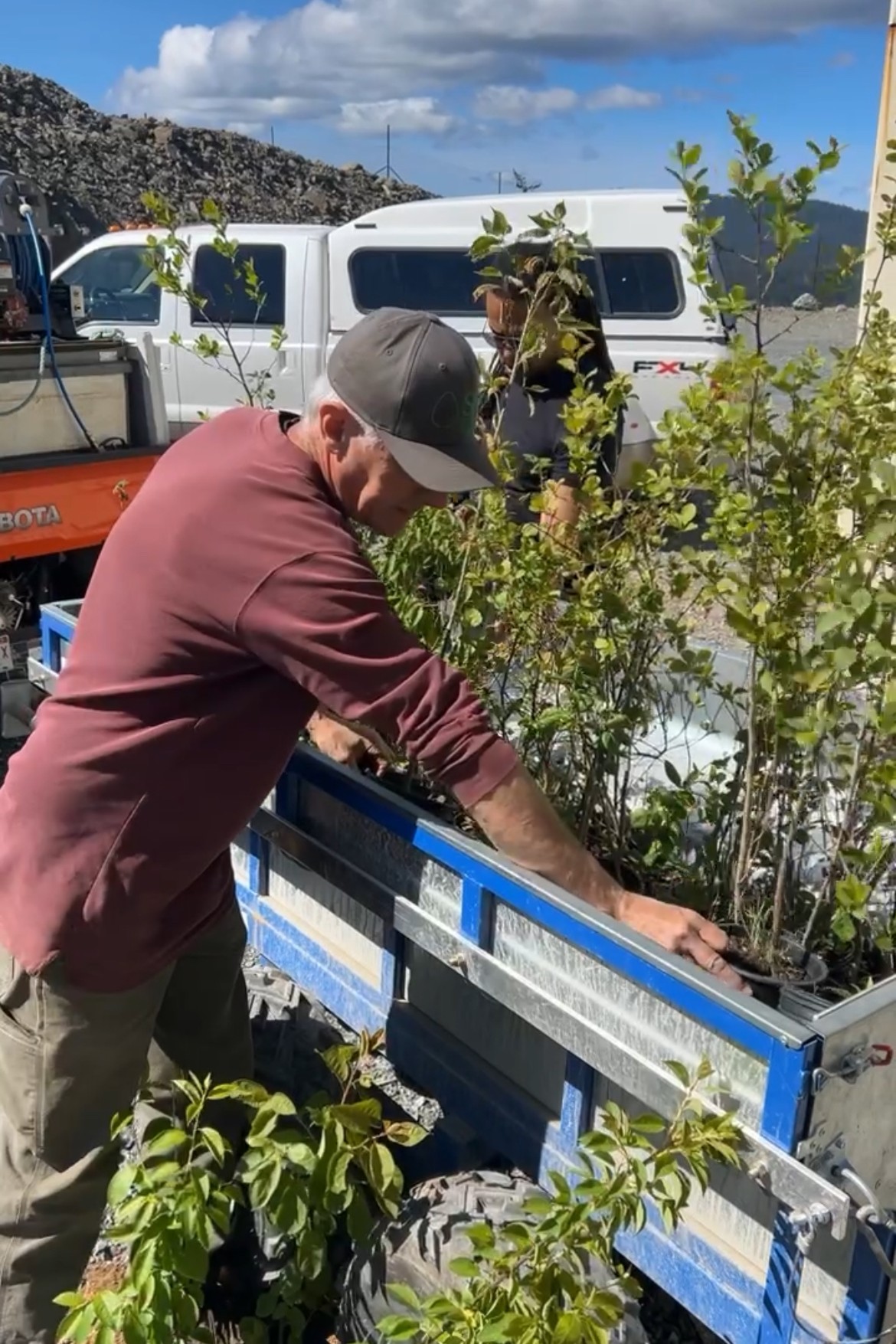
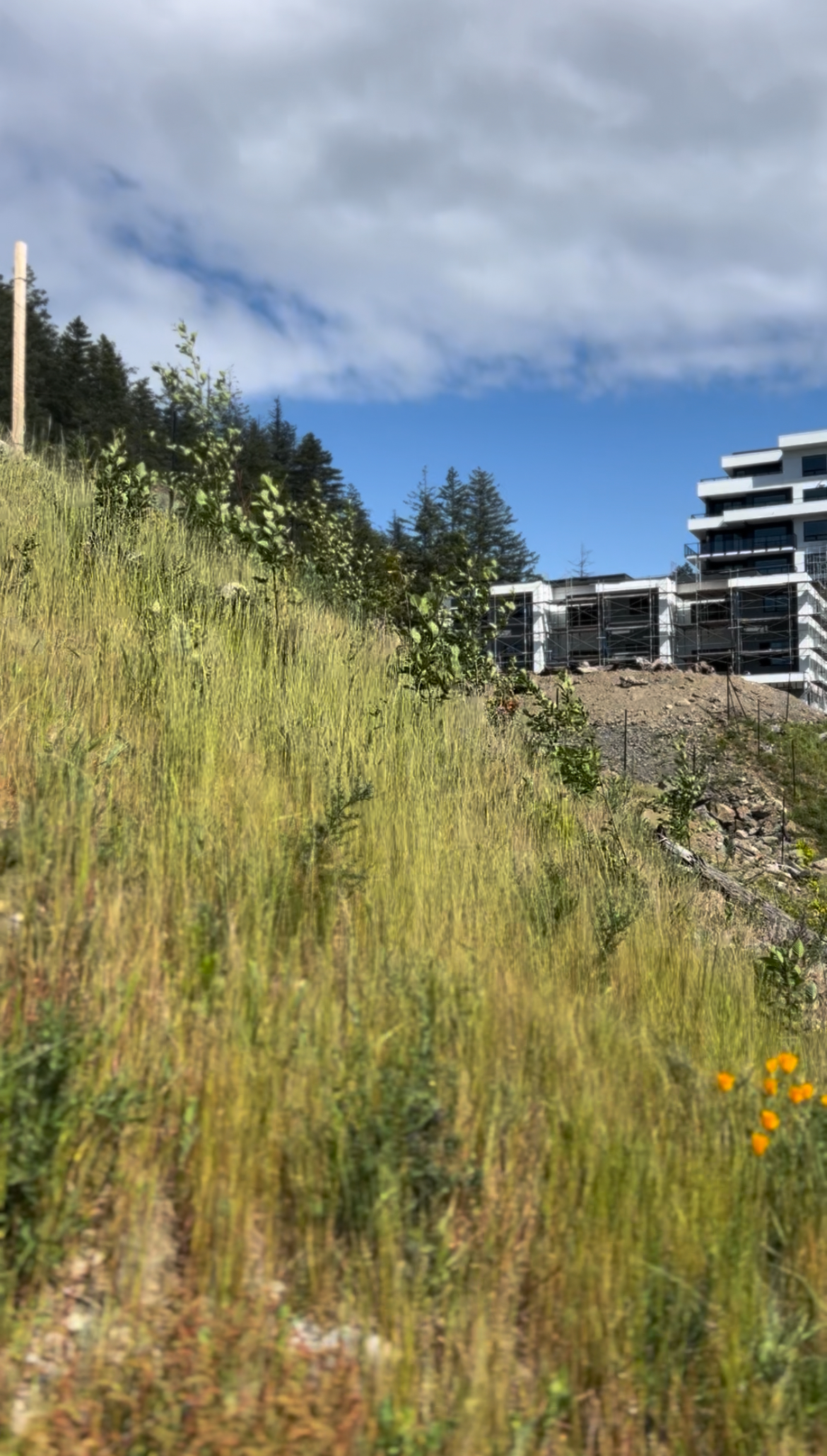
Over 6,000 native plants were installed and have established well across both seeded and planted areas. Early irrigation, soil amendment, and protection measures helped the vegetation adapt to harsh slope conditions. Three years in, SHR continues targeted invasive species management to safeguard the restoration and support long-term ecological function. This project restored high-visibility, South facing degraded development slopes into native, fire-smart, drought-tolerant habitat using ecological precision and field-based innovation. It demonstrated how strong collaboration between developers, restoration experts, and ecological monitors can produce lasting, adaptive green infrastructure in some of the most challenging urban terrain.

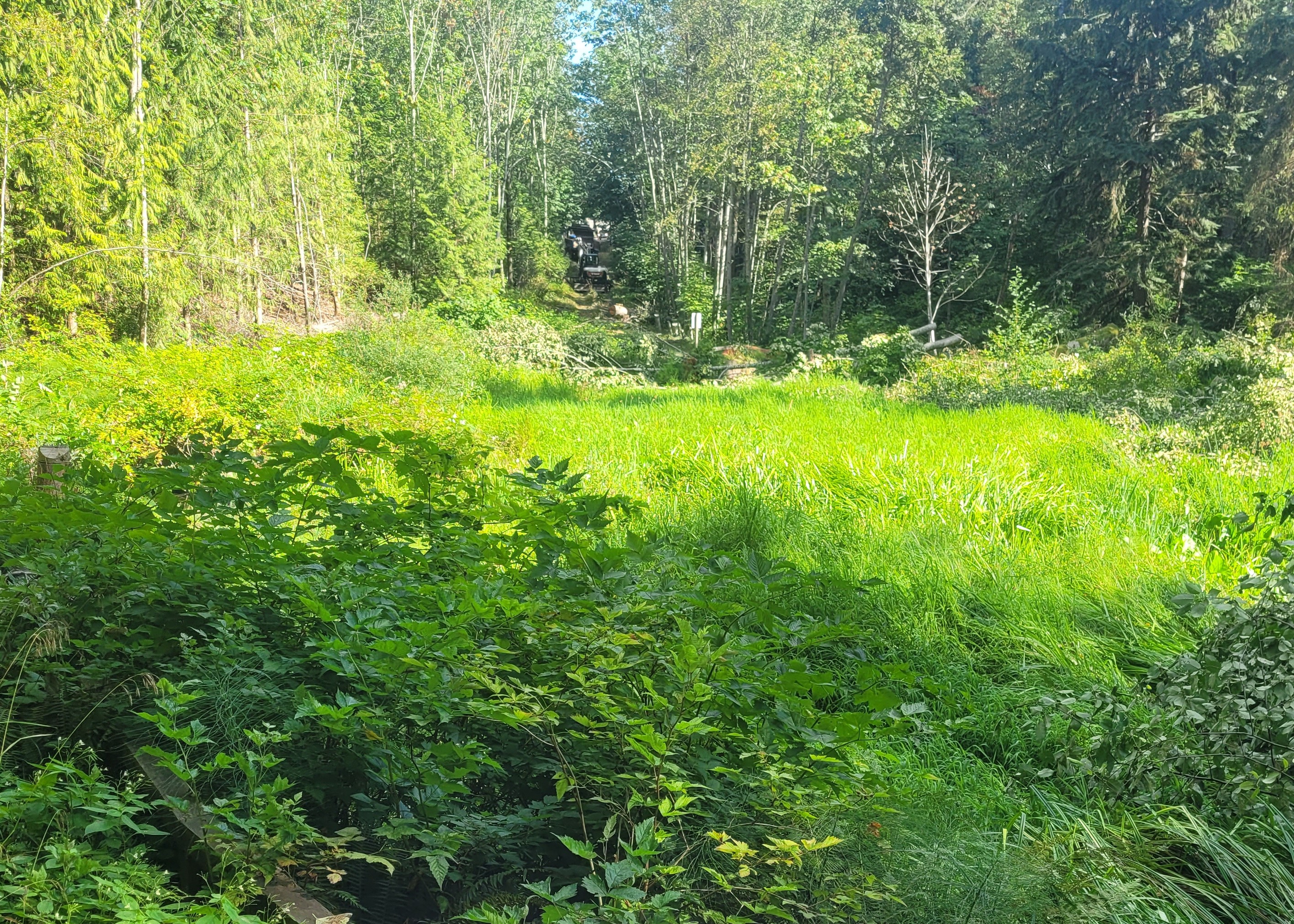
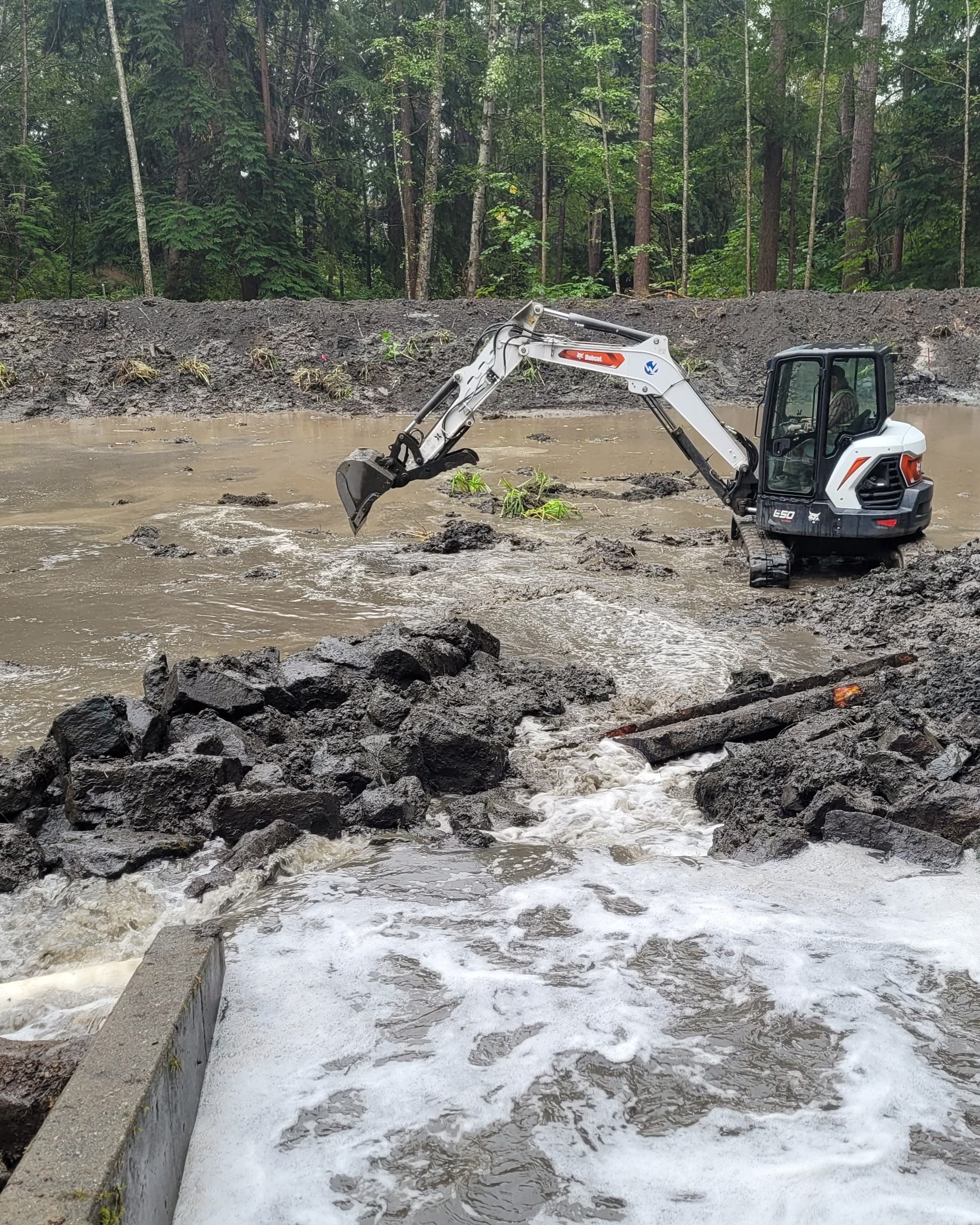
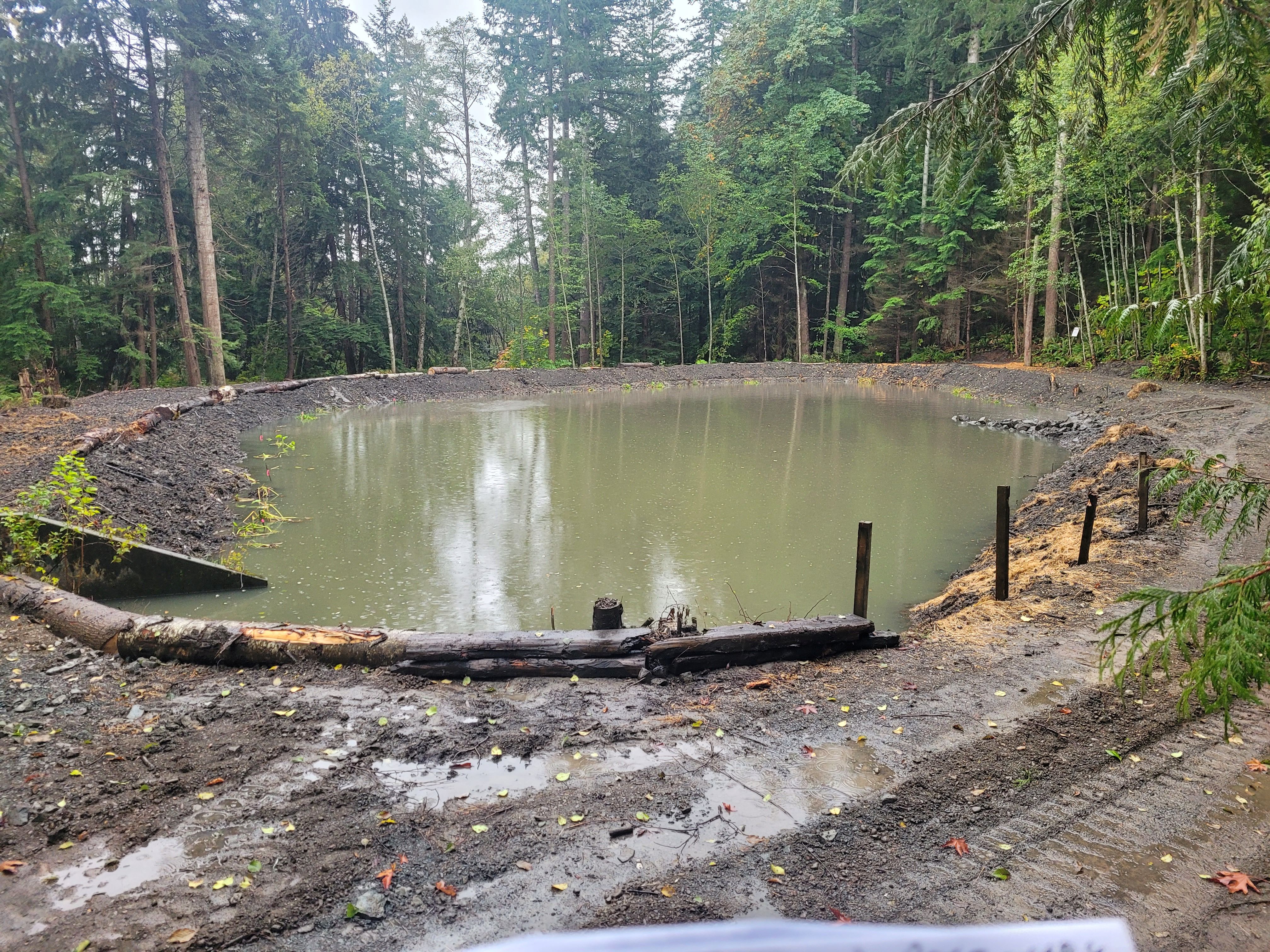
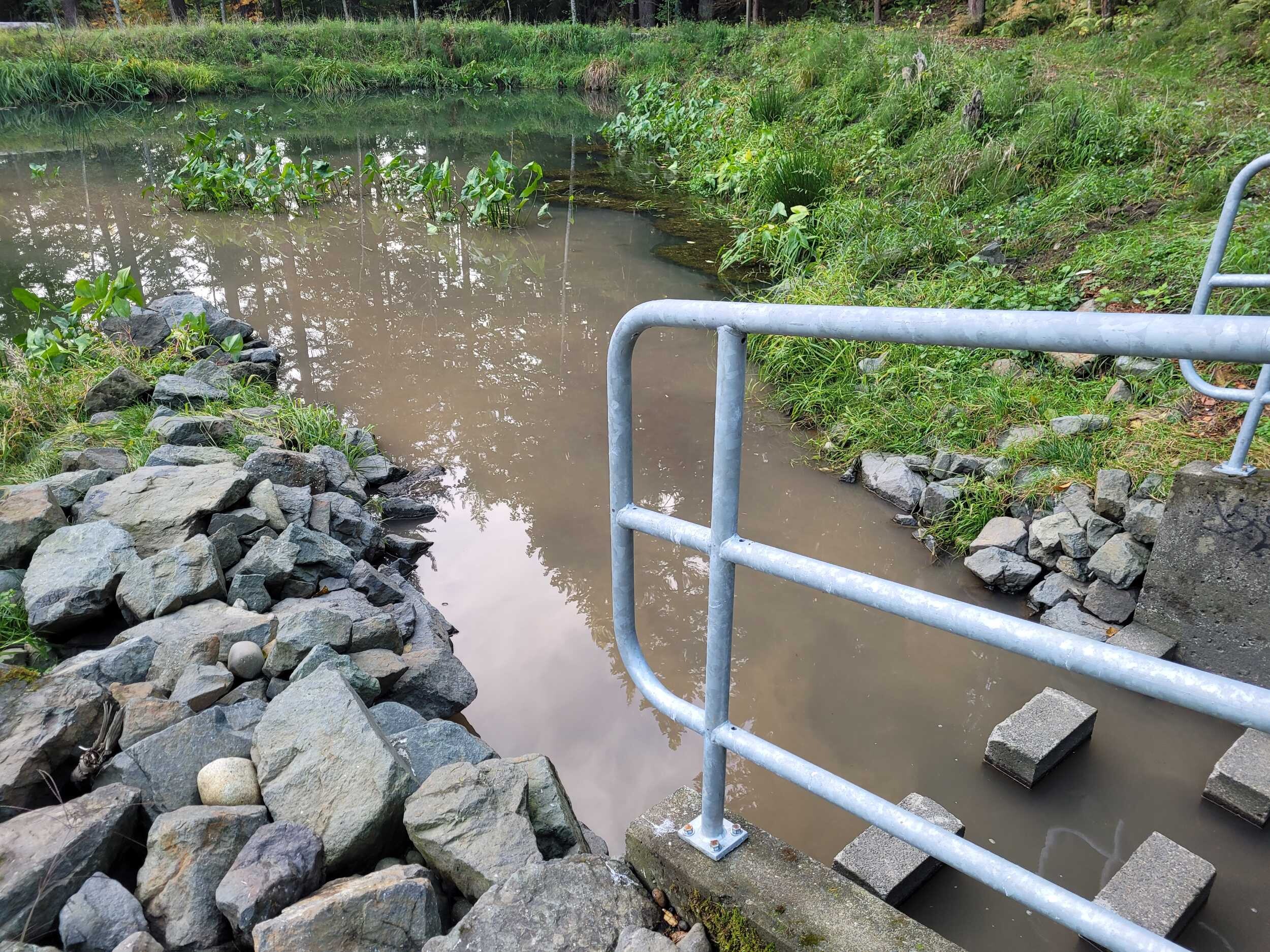
Dogwood Detention Pond Rehabilitaiton - Campbell River, BC
City of Campbell River

Scope of Work
Invasive species removal across ~160 acres initially before Beachlands sale. Native habitat restoration and slope stabilization. Trail system design and construction (multi-phased). Soil amendment, topsoil distribution, planting, and erosion control along the entire wildland-timber interface. Boulder and gravel installation using on property materials.
Approach
SHR was brought on early to assess restoration opportunities and manage invasive species before development began. As the project expanded, our team designed and built a permanent perimeter trail system, working carefully within forested edges, selectively falling dead stands and aligning trails to avoid remnant old-growth Douglas-fir. On-site materials from nearby developments were repurposed to rebuild degraded slopes and construct durable trails, transforming former quarry ground into stable, plantable corridors and inviting natural pathways. The work followed a strategic, phased plan that blended ecological restoration with long-term trail infrastructure.
Challenges
Entire site was overrun with noxious weeds including Scotch broom, Poison Hemlock, Giant Hogweed, Milk Thistle, Canada thistle, and diffuse knapweed.

Initial site conditions were raw quarry slopes with no topsoil, little water retention, and poor plant survivability.

Trail corridors had to be established before residential infrastructure, across sloped and forested terrain.

Some builds occurred after housing construction, requiring delicate maneuvering in tight zones.

Scattered large dead Grand Firs throughout the site, including several dense clusters, required precision falling within live timber, demanding the expertise of a seasoned faller to navigate variable spacing and avoid collateral damage.
Outcome
A trail network completed over a 10-year period, with final construction in 2022. The system has remained durable under heavy public use, with formerly degraded slopes now functioning as stable, densely planted native corridors. Boulder-armored sections, split-rail fencing, and grade-adapted pathways continue to hold their structure and aesthetic with minimal maintenance. This project stands as one of SHR’s longest-running and most visible restoration achievements.

Charters Creek Salmon Habitat Enhancement – Sooke, BC
Juan de Fuca Salmon Restoration Society

Scope of Work
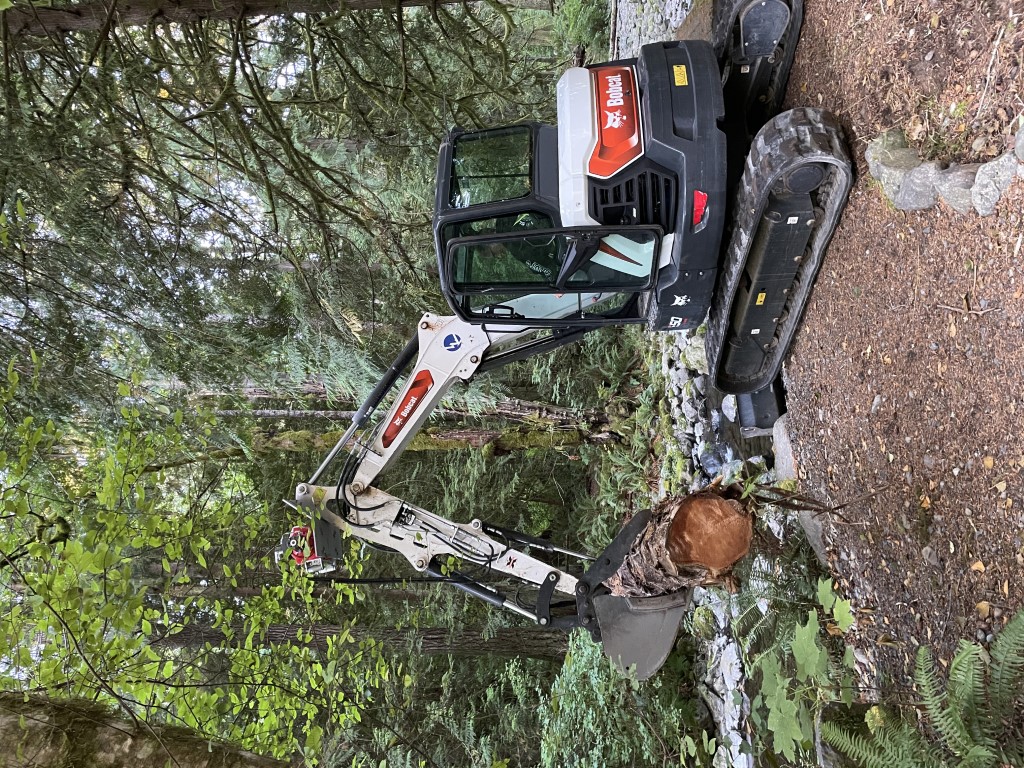
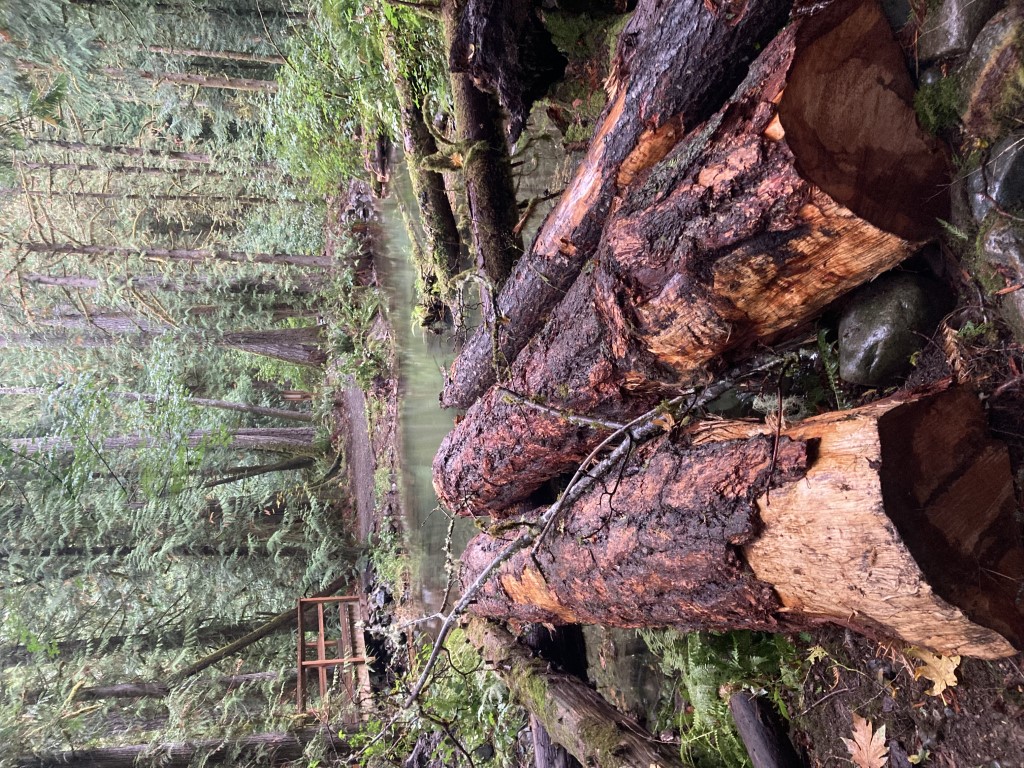
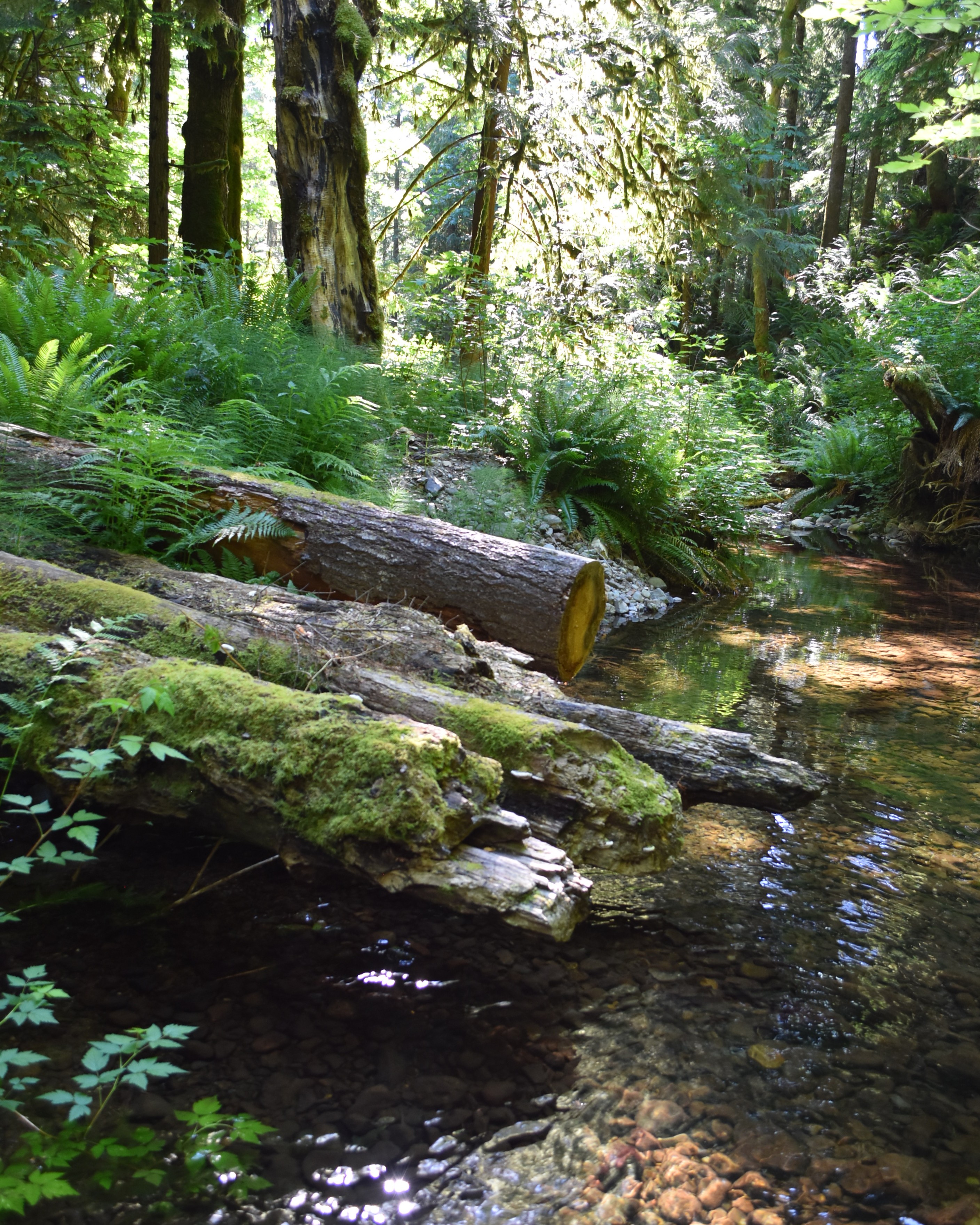
Rearranged in-stream boulders to reconnect flow paths across disconnected channels. Excavated and reshaped sections of creek bed to create deeper salmon holding pools. Installed natural woody debris structures to protect salmon from bear predation. Felled dangerous hang-up trees using long-line winching in zones not reachable by conventional methods. Winched salvaged logs across pond and channel zones using a compact E50 excavator. Carefully lifted and reinstated native ferns and understory vegetation to preserve site integrity
Challenges
Tight access requiring precision equipment and careful movement.

Unstable hang-up trees in remote areas that posed high safety risks.

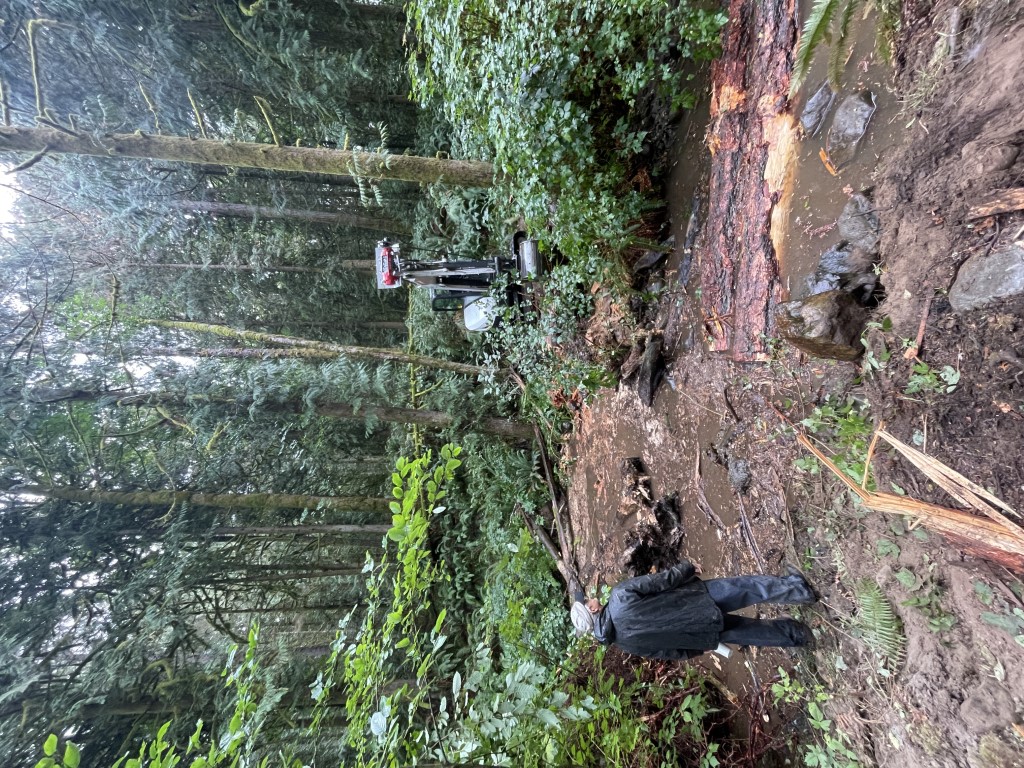
Post-flood channel changes disrupting natural water flow and upstream fish movement.

Sensitive riparian habitat where the site needed to appear untouched on completion.

Working within mature forest containing large standing timber.
Innovative Approach
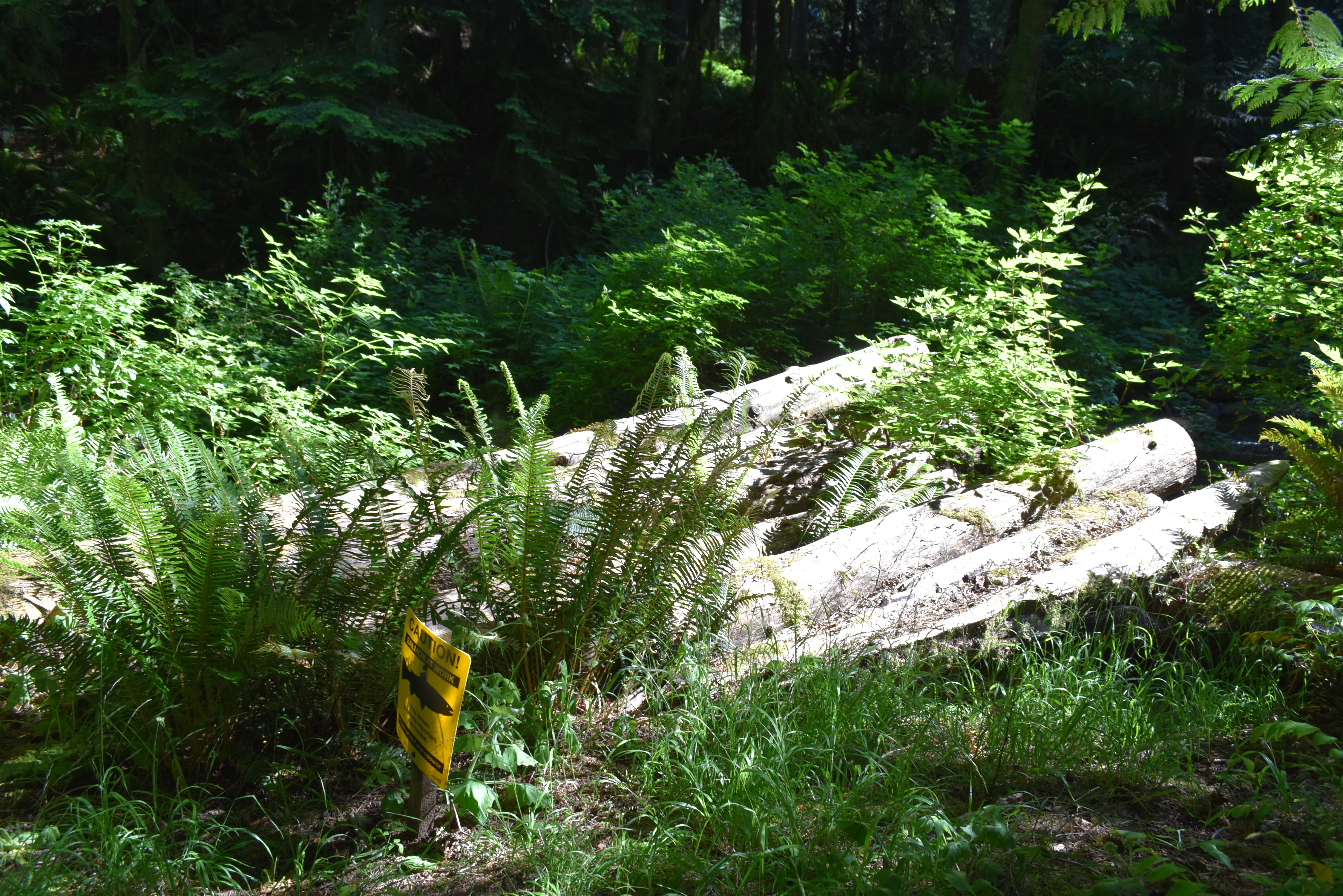
SHR used a low-impact approach tailored to tight access and sensitive habitat. Salvaged woody material was repositioned to rebuild channel structure, deepen holding pools, and create natural overhead cover for salmon. All work was carried out with equipment and techniques approved for in-stream environments, with hand crews completing fine placement to maintain the integrity of the forest floor and riparian vegetation.
Outcome
Creek flow was reconnected across previously isolated sections. Deepened holding pools now provide critical refuge for salmon during vulnerable life stages. Wood-cover structures blend seamlessly into the natural environment and reduce predator pressure. The site was left in a visually undisturbed state, with no noticeable construction signature.
Notable Ecological/Social Value
Charters Creek now functions as a more resilient spawning and rearing environment, supporting long-term salmon recovery in a key watershed. This project reflects a strong partnership with the Juan de Fuca Salmon Restoration Society and demonstrates SHR’s ability to deliver precise, low-impact restoration within sensitive riparian systems. The enhancements made here contribute to long-term salmon survival and stronger ecosystem health for the Sooke community and the broader watershed.

Langford Lake Turtle Habitat Restoration & Shoreline Cleanup – Langford, BC
City of Langford, Westhills Land Corp.

Scope of Work
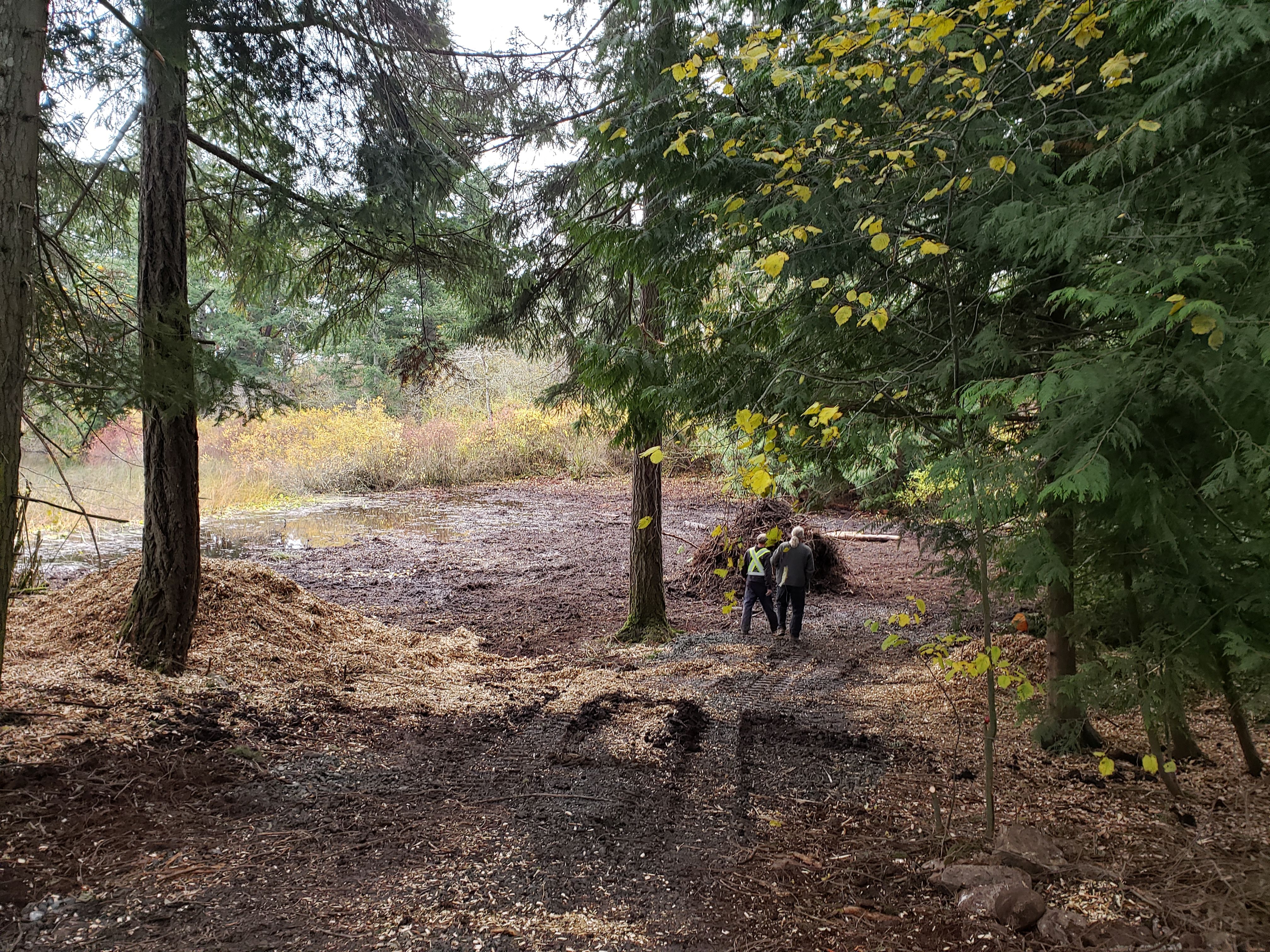
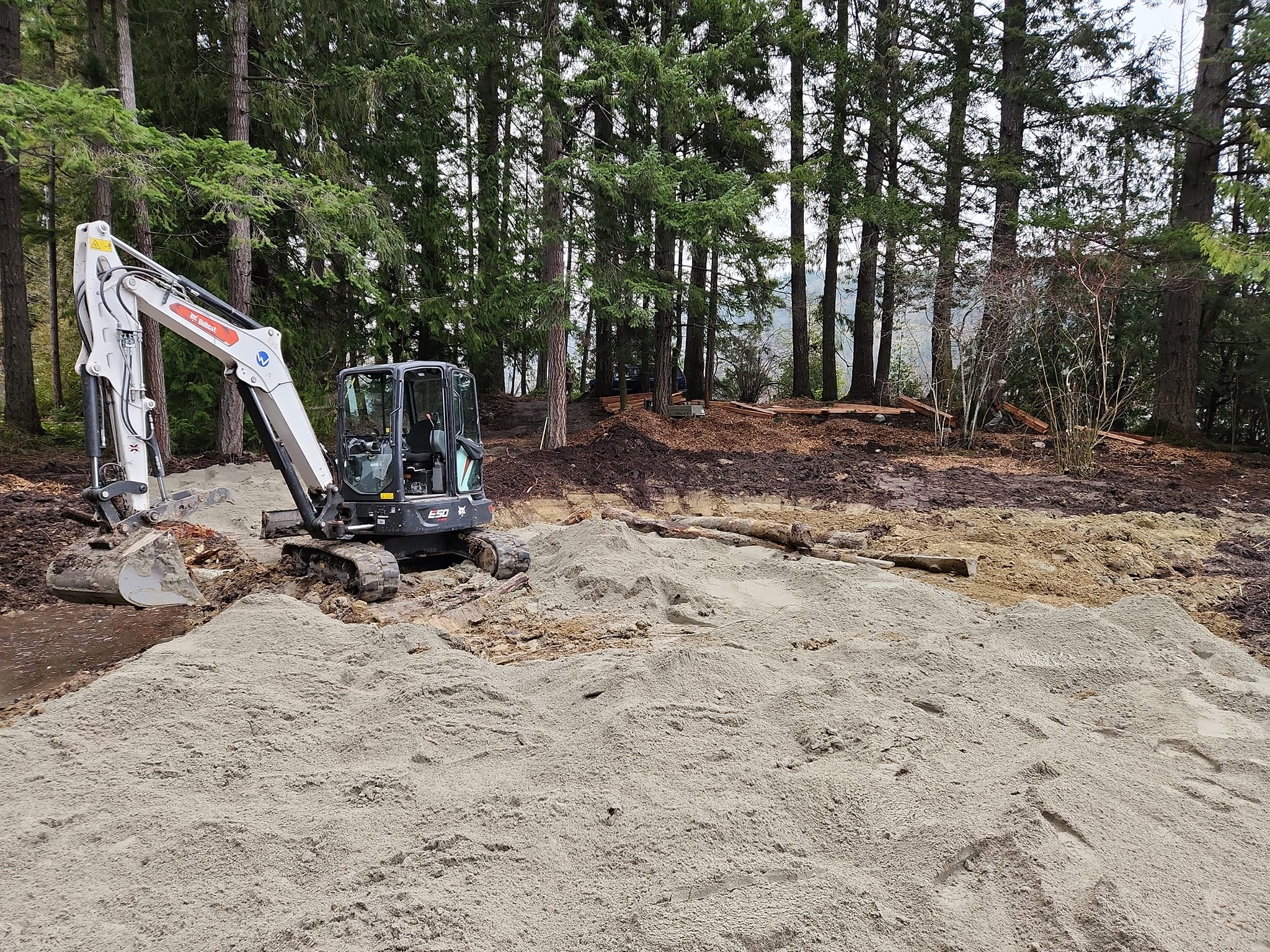
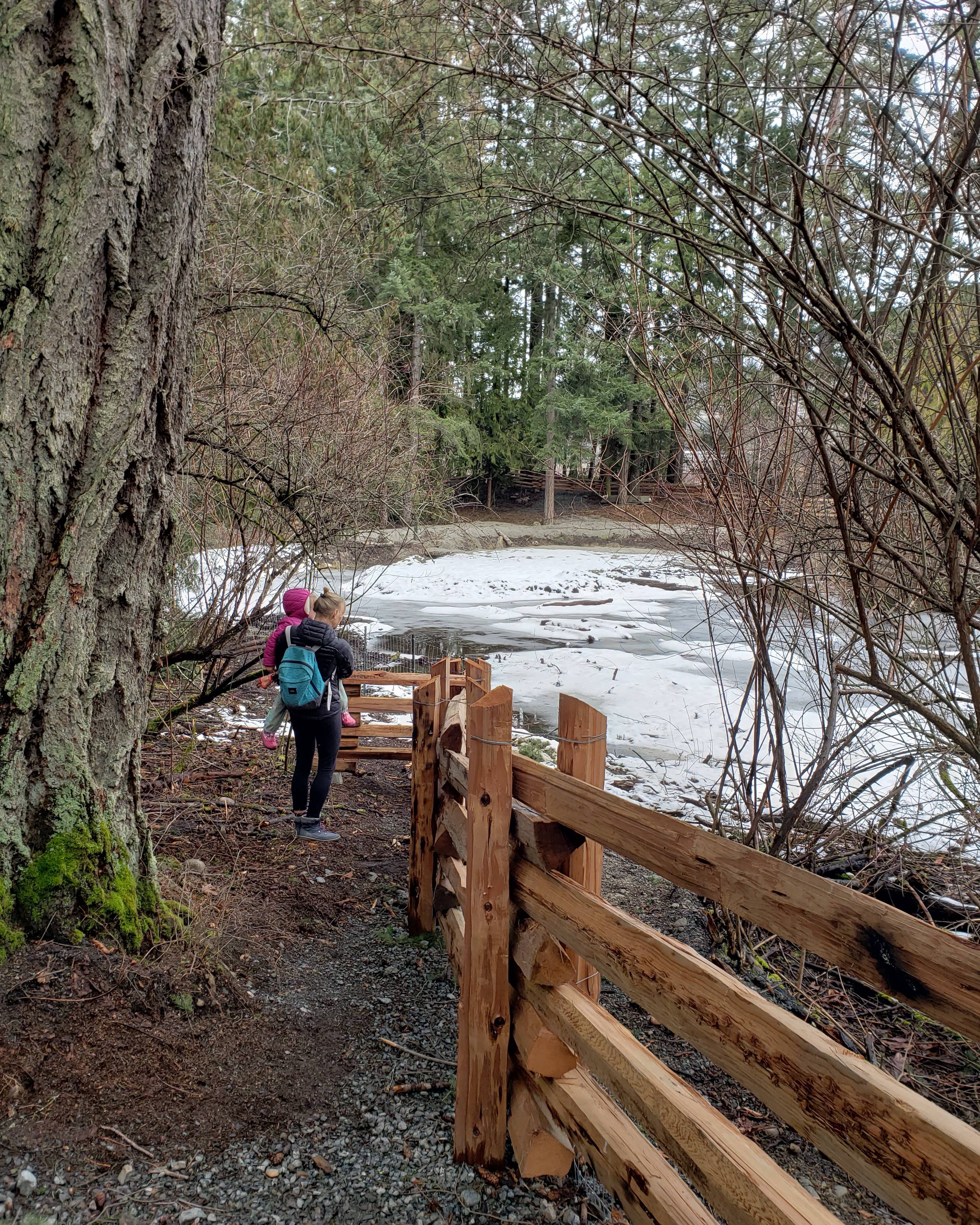
Detailed habitat assessment and suitability review for red-listed Western Painted Turtles. Shoreline cleanup and removal of woody debris to open movement and nesting corridors. Selective vegetation removal using low-impact electric equipment. Regrading and widening of lake access for service vehicles and restoration machineryPreparation and anchoring of multiple turtle basking logs. Hauling and placement of clean sand to create dedicated nesting habitat. Split-rail cedar fencing installation to protect sensitive shoreline zones and guide public access. Native planting to stabilize soils and restore natural shoreline structure. Debris hauling, chipping, and stump removal along fragmented shoreline sections.

Challenges
Limited natural nesting habitat due to urbanization and hardened shoreline edges.

Fragmented terrestrial suitability zones restricting turtle movement.

Balancing public lake access with wildlife protection
Working within riparian soils while keeping the site visually natural.

Coordinating complex shoreline cleanup across steep, vegetated sections.

Innovative Approach
SHR applied a targeted, low-impact restoration strategy tailored specifically to Western Painted Turtle habitat. Shoreline vegetation was selectively thinned to create open nesting and basking corridors while maintaining riparian integrity. Custom-prepared basking logs were anchored in stable, long-term configurations, and sand nesting zones were installed in areas identified through suitability analysis. Split-rail cedar fencing was placed to reduce public intrusion and protect early-stage habitat improvements. All work was executed with equipment and techniques appropriate for sensitive lakeshore conditions.

Outcome
Multiple high-quality nesting zones established along the shoreline. Enhanced access and movement corridors for Western Painted Turtles. Safe, natural basking structures installed in key sun-exposed locations. Shoreline restored to a cleaner, more functional riparian state. Public access managed through protective fencing without reducing lake enjoyment.
Notable Ecological/Social Value
This multi-year effort restored critical habitat for a red-listed species while maintaining the recreational value of a well-used urban lake. The work supports long-term turtle population resilience, improves shoreline aesthetics, and demonstrates how targeted restoration can coexist with community use. Strong collaboration between municipal partners, environmental consultants, and SHR ensured durable ecological gains for one of Langford’s key natural assets.